Table of Contents
Hook: The Hidden Cost of Manual Marketing Tasks for Modern Businesses
Marketers waste an astonishing 13 hours a week on manual tasks. This inefficiency not only costs valuable time but also limits creativity and productivity. The advent of artificial intelligence (AI) is changing the landscape of marketing, allowing teams to streamline operations, Autonomous Marketing and focus on strategic initiatives.
By integrating AI into their marketing strategies, businesses can optimize content delivery, enhance customer relationships, and increase overall performance. Let’s explore how autonomous marketing is reshaping our marketing strategies, making them more efficient and effective.
What is Autonomous Marketing?
Imagine, Activate, Validate
Autonomous marketing is a comprehensive approach that leverages AI and machine learning to automate various marketing functions. It involves three critical stages:
- Imagine:
In this phase, AI analyzes historical data and market trends, enabling marketers to brainstorm new strategies and creative approaches effectively. - Activate:
Once strategies are defined, AI seamlessly automates the execution of marketing campaigns, including everything from content creation to distribution. - Validate:
AI monitors campaign performance in real time, offering insights and analytics that allow marketers to refine and improve marketing strategies continuously.
Understanding these phases helps marketers leverage AI to its full potential and build a more autonomous workflow.
ActiveCampaign’s AI Agents in Action
Overview of ActiveCampaign’s AI Features
ActiveCampaign is at the forefront of autonomous marketing, providing various AI features designed to streamline workflows. Key functionalities include:
- Predictive Sending:
This feature analyzes past email engagement behavior to determine the best times for sending messages to each recipient, enhancing open rates and engagement. - Content Personalization:
AI-driven algorithms dynamically adjust email content and landing pages according to user profiles, preferences, and past behaviors. - Lead Scoring:
AI continuously evaluates leads based on their interactions with your content, providing scores to help sales teams prioritize their efforts.
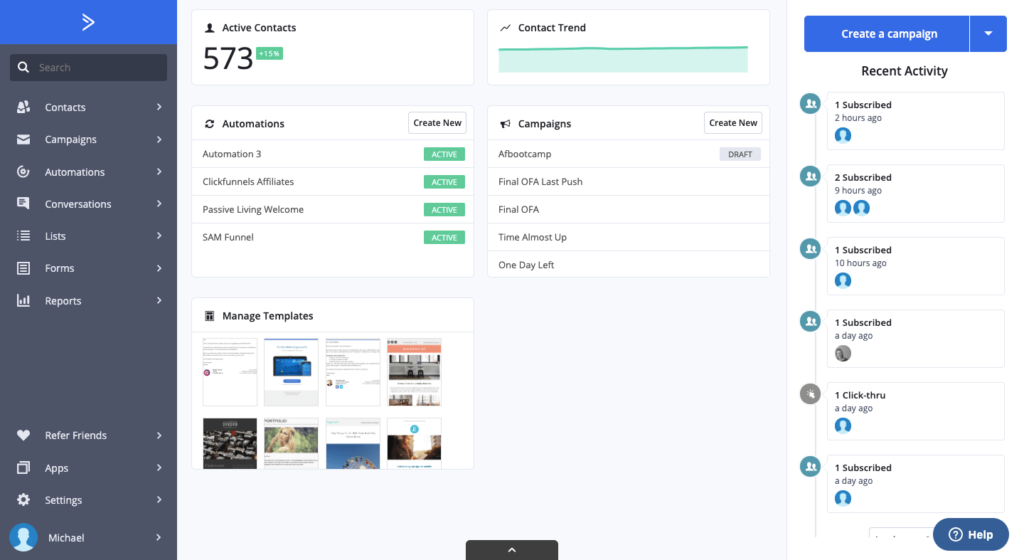
ActiveCampaign’s AI Dashboard Screenshot
Real Results: Customer Success Stories
Case Study 1: Retail Brand
A shoe retailer implemented ActiveCampaign’s AI-driven email personalization, resulting in a 30% increase in open rates and improved customer engagement. By utilizing predictive analytics, they aligned their messaging with customer preferences effectively.
Case Study 2: E-commerce Site
An online marketplace that integrated ActiveCampaign’s AI features reported a 50% boost in conversions over six months. By leveraging data-driven insights, the business could target specific customer segments more effectively.
Case Study 3: Non-Profit Organization
A non-profit organization saw a significant uplift in donor engagement through automated campaigns tailored by AI. They conservatively estimated a 20% increase in donations with smarter workflows and personalized communication.
Why AI-Powered Automation is Essential for Marketers
The Benefits of AI in Marketing
- Increased Efficiency:
AI eliminates repetitive manual tasks, allowing marketers to allocate their resources toward strategy and engagement. - Enhanced Accuracy:
Automation reduces the chance of human error, leading to more effective campaigns. - Scalability:
As businesses grow, AI can scale marketing operations without significant additional manpower.
Focusing on Strategy Instead of Execution
With AI managing routine tasks, marketers can shift their focus from daily execution to long-term strategy development, enabling them to craft more impactful and innovative marketing campaigns.
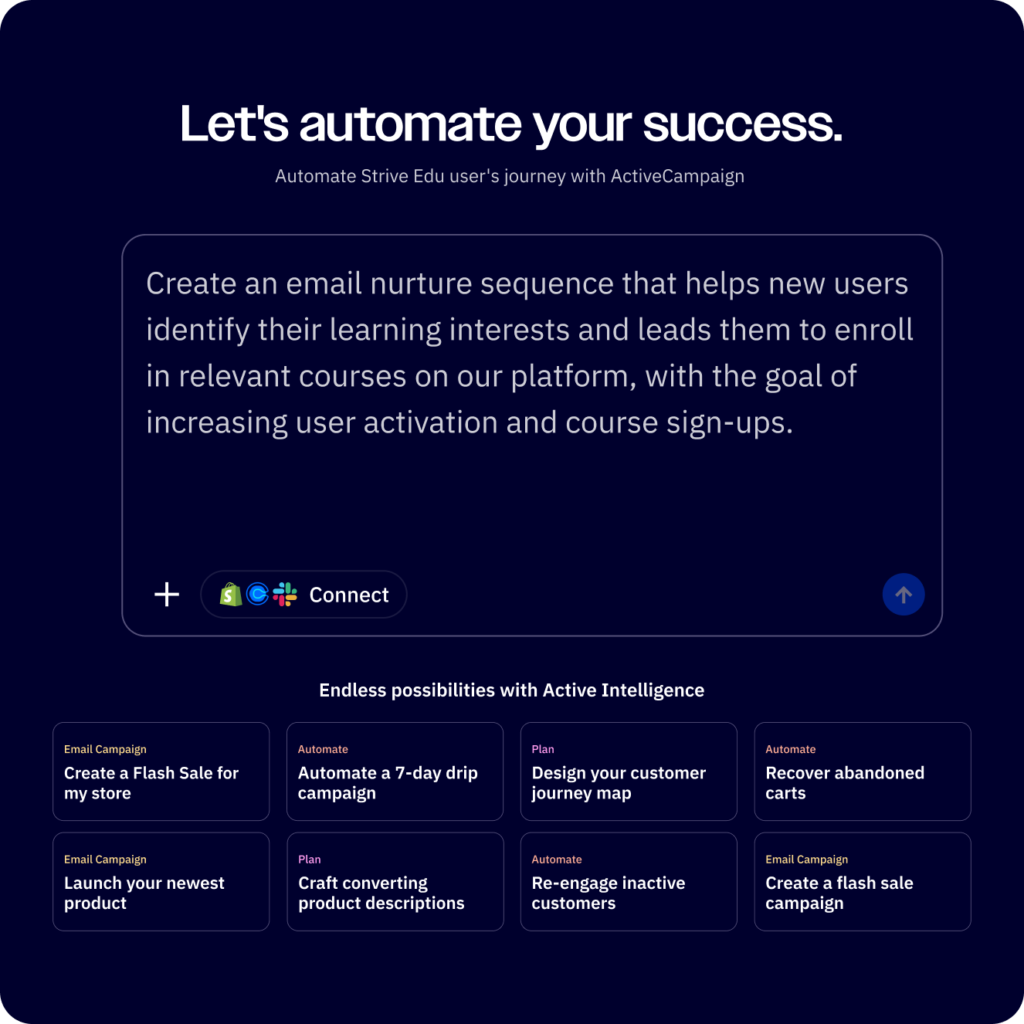
Set Goals in Plain Language, AI Handles Execution
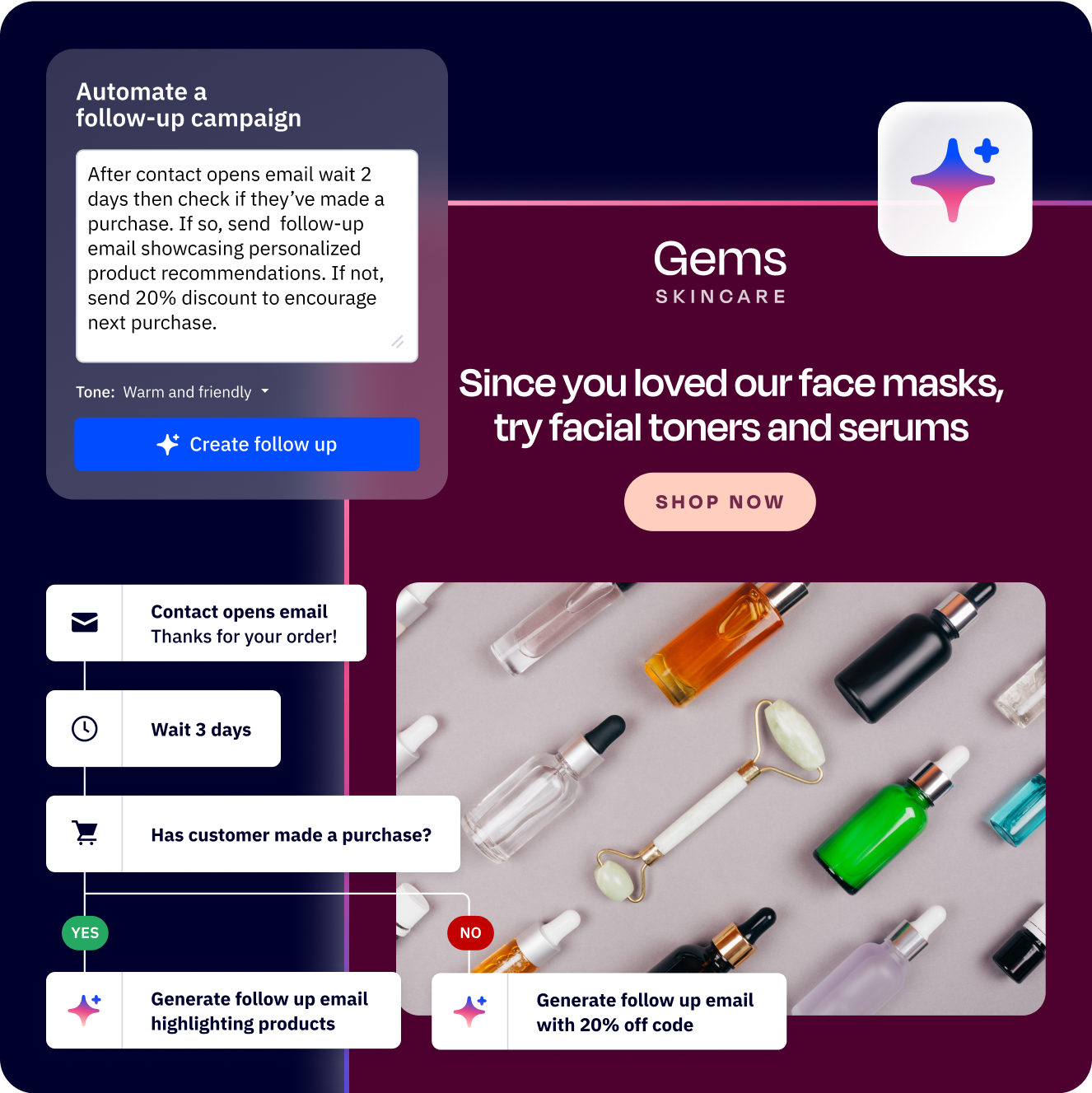
Gone are the days when marketers had to navigate complex interfaces and technical jargon to set up campaigns. With the advent of autonomous marketing platforms, you can now set your goals in plain, straightforward language.
For example, if you aim to boost customer engagement through personalized email communications, you can state this objective clearly. The AI then interprets your intent and breaks it down into actionable steps. Advanced natural language processing algorithms enable the AI to understand your requests with context and nuance.
This intuitive functionality empowers marketers especially those without technical expertise to focus on what truly matters: crafting compelling messages and developing creative strategies. The AI takes care of the intricacies of execution, including audience segmentation, content generation, and performance tracking, ensuring a seamless transition from goal-setting to campaign launch.
3x Faster Campaign Building: 15 Days Saved from Idea to Launch
Time efficiency is a hallmark of autonomous marketing. Traditional campaign development can be a lengthy process often taking weeks or even months from initial brainstorming to launch. However, with AI-driven tools, this timeline can be drastically shortened, with many marketers reporting that they can build campaigns three times faster than conventional methods.
Imagine initiating a new marketing concept today and having it reach your target audience in a matter of days, rather than weeks. This acceleration translates to an average savings of 15 days from concept to launch.
How is this possible? AI automates numerous time-consuming tasks, such as:
- Audience Segmentation: By analyzing customer data, AI can automatically group audiences based on behavior and preferences.
- Content Creation: Utilizing machine learning algorithms, AI can generate personalized emails, social media posts, and other marketing materials that resonate with your audience.
- Performance Analysis: AI continuously monitors campaign metrics, allowing for real-time adjustments based on performance data.
By transforming these tasks, AI enables teams to respond quickly to market changes, increasing competitiveness and agility.
1 in Email Deliverability at 93.4%
Email marketing is often a crucial component of any marketing strategy, and one key factor that determines its success is deliverability. Achieving a high deliverability rate ensures that your carefully crafted emails reach your audience’s primary inboxes, maximizing engagement.
With an impressive rate of 93.4%, autonomous marketing platforms set a new standard for ensuring that your messages are seen. But what contributes to this high deliverability?
Several factors play a role:
- Algorithm Optimization: AI continually analyzes email engagement patterns, sender reputation, and user feedback to improve deliverability rates.
- Behavioral Adaptation: By examining how recipients interact with previous emails, AI can adjust sending strategies to optimize future campaigns.
- List Hygiene: Automated processes ensure that your email lists remain clean and updated, removing inactive addresses and improving overall sender reputation.
Achieving a high deliverability rate is critical for ensuring that marketing efforts convert into tangible business results.
First Autonomous Marketing Platform with Claude Integration
ActiveCampaign stands out as a leader in the autonomous marketing field, particularly with its integration of Claude, an advanced AI model that enhances marketing capabilities.
Claude is uniquely positioned to improve the functionality of autonomous marketing systems by:
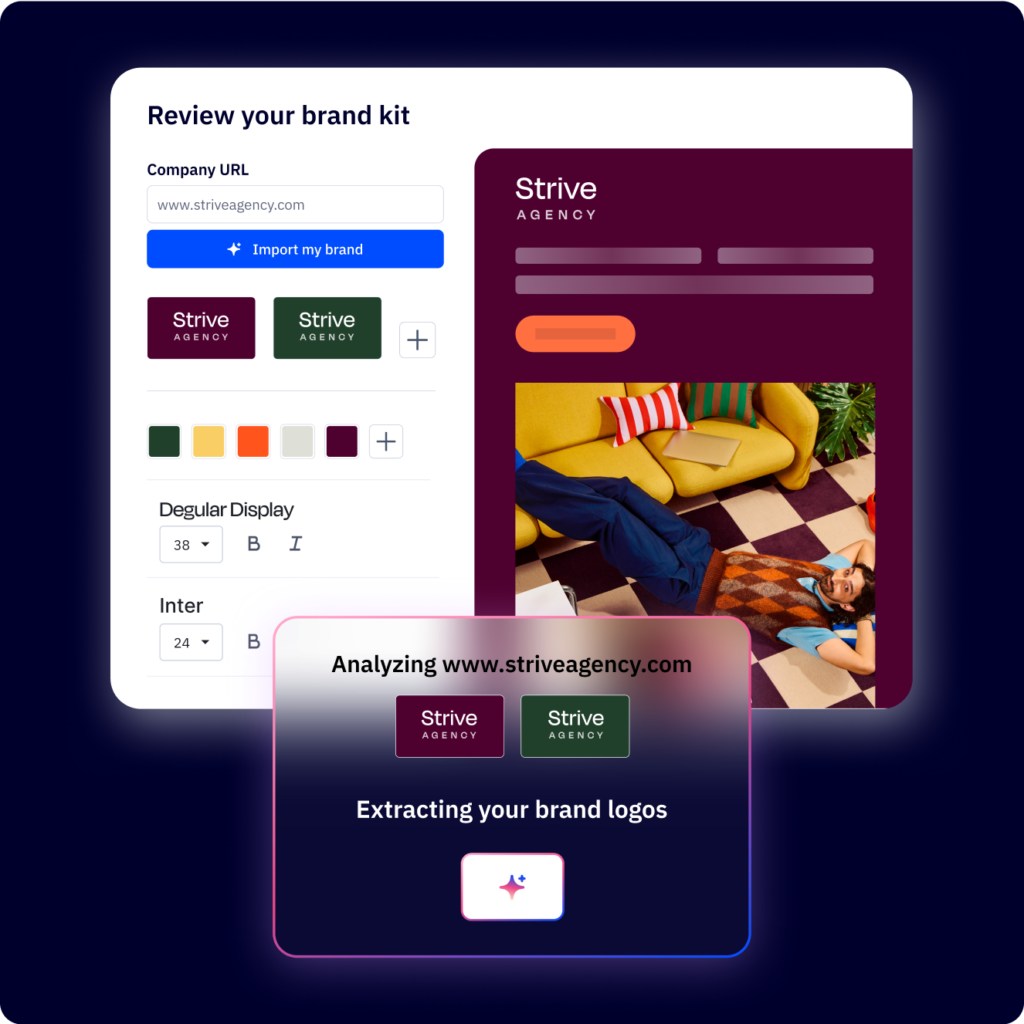
- Understanding Complex Requests: Claude can process natural language inputs, allowing marketers to express their goals and requirements easily.
- Generating Personalized Content: This AI can formulate tailored messages that resonate with target audiences, enhancing engagement and conversion rates.
- Real-Time Adjustments: Claude can dynamically adjust campaigns based on real-time data, ensuring that marketing efforts remain relevant and effective.
This integration represents a significant step forward in marketing technology, allowing businesses to harness the power of AI effectively.
Predictive Sending Increases CTR by 17% on Average
One standout feature of autonomous marketing platforms is Predictive Sending. This capability leverages historical engagement data to determine the optimal timing for sending emails to individual recipients.
On average, using Predictive Sending has been shown to increase click-through rates (CTR) by an impressive 17%. Here’s how it works:
- Data Analysis: The AI examines past interaction patterns such as when recipients typically open emails and which content types they engage with most.
- Personalization: By tailoring send times to individual preferences and behaviors, Predictive Sending ensures that messages arrive when customers are most likely to engage.
- Continuous Learning: As more data is collected, the AI continuously refines its algorithms, improving the accuracy of its predictions over time.
This enhanced engagement leads to higher open rates, allowing businesses to achieve better results from their marketing campaigns.
Building Smarter Customer Journeys with AI-Powered Automation
How AI Improves Customer Experience
By analyzing customer behavior in real time, AI allows marketers to build personalized customer journeys. This approach creates seamless narratives across multiple channels, enhancing user experience and generating higher engagement.
Best Practices for Implementing AI in Your Marketing Workflow
- Start Small:
Begin with a single aspect of your marketing strategy (e.g., email campaigns) to automate and gradually expand. - Utilize Data:
Make data-driven decisions to inform AI algorithms and enhance campaign performance. - Monitor Performance:
Regularly analyze results and tweak AI settings for ongoing optimization.
Real results from marketers using autonomous marketing
This isn’t just theory. Marketers adopting autonomous marketing through ActiveCampaign’s tools are seeing very concrete improvements.
From ActiveCampaign’s own data and customer stories:
- 87% of marketers using autonomous marketing say they have significantly more time for strategic work.
- Many reclaim 13+ hours each week that used to be spent on manual tasks like reporting and list maintenance.
- Early users of Active Intelligence report up to 20% performance gains and campaigns built three times faster.
One example that stands out is the University at Albany’s MBA for Executives program. The marketing director who is a one-person team used ActiveCampaign to grow enrollments by 27% year-over-year. Their email open rates jumped from around 18–20% to 35–40%, and inquiries increased significantly, all without hiring additional staff.
In another case highlighted by ActiveCampaign, a marketer scaled from a few hundred contacts to over 5,000, doubled open rates to around 35–40%, and cut reporting time from hours to seconds simply by leaning into AI-driven journeys and reporting.
These stories have a common thread: small or stretched teams using AI agents to operate like much larger ones.
How to start using autonomous marketing in your own business
If you’re curious but a little skeptical, you don’t have to “go all in” on day one. A good starting point is to choose one journey that already matters to you and rebuild just that piece with AI in the loop.
Here’s a straightforward way to do it with ActiveCampaign:
- Turn on the AI features
- Make sure the AI capabilities (Active Intelligence, predictive sending, AI content, etc.) are enabled in your account.
- Pick one journey
- Good candidates: new-subscriber welcome sequence, lead nurture, onboarding, or win-back.
- Use AI to design it
- Describe your goal and audience.
- Let the AI propose the structure and first draft of content.
- Activate and refine
- Review and edit until it feels right.
- Turn on predictive sending and any relevant AI-driven options.
- Validate and improve
- After a couple of weeks, look at the insights and recommendations.
- Make small adjustments regularly rather than big changes occasionally.
Once you’ve seen how much time and mental space you regain from just one journey, it becomes much easier to roll the same approach out across more of your marketing.
The Future of Marketing Teams in an AI-Driven World
Evolving Roles and Responsibilities
As AI takes on more routine tasks, the role of marketing teams will inevitably shift:
- Strategic Development:
Teams will focus on creating meaningful content and strategies rather than mundane execution. - Creative Problem-Solving:
Marketers will be able to engage in more creative and innovative problem-solving activities, leveraging insights offered by AI.
Old way vs. new way (with concrete examples)
Let’s walk through a few everyday marketing tasks and see how they look before and after autonomous marketing.
1. Building a lead nurture
Old way:
- You sketch out a 6-email nurture sequence on paper.
- You manually build the workflow: trigger, delay, email, condition, repeat.
- Any change in your offer means editing multiple emails and steps.
New way with ActiveCampaign:
- You describe your goal: “Nurture new leads for two weeks and push a discovery call.”
- The AI suggests a draft flow with emails, timing, and segmentation rules.
- You edit the copy, adjust a few steps, and turn it on.
Because predictive tools handle timing and engagement optimization, the sequence can adapt to each contact instead of everybody following the same rigid path.
2. Writing and testing email content
Old way:
- You write one subject line because you’re in a rush.
- You send the same email to everyone.
- You hope for the best and maybe test something “next time.”
New way:
- You have the AI generate several subject line options and alternative intros for the body.
- Predictive content decides which version goes to which segment or contact based on past behavior.
- Over time, the system learns which tones, lengths, or angles actually get results.
The heavy lifting of testing is no longer on your shoulders. You’re still in control, but you’re not doing all the manual work.
3. Segmentation
Old way:
- You wrestle with filters like “Tag is X AND Last activity date is within 90 days AND Has not purchased.”
- You triple-check the logic because one wrong operator breaks the whole segment.
New way:
- You type: “Show me people active in the last 90 days who clicked our pricing page but haven’t bought.”
- AI translates that into the right segment conditions.
- You save it and reuse that segment across campaigns.
ActiveCampaign’s AI-powered segmentation reduces the technical barrier that keeps many small teams from doing segmentation at all.
4. Reporting
Old way:
- At the end of the month, you lose hours pulling reports and trying to answer basic questions like “Which sequence leads to the most demo bookings?”
New way:
- The system already knows which path leads to more demos and can surface that insight directly.
- You get recommendations instead of raw data.
ActiveCampaign has shared that reporting which used to take marketers more than 10 hours per month now happens almost instantly for teams that fully lean into AI.
Where ActiveCampaign’s AI agents show up
ActiveCampaign isn’t just sprinkling AI into one or two features; they’re building a network of AI agents that sit under the Active Intelligence umbrella and touch multiple parts of the platform.
Here are some of the key ways those agents show up in real work:
- Predictive sending: Learns when each contact tends to open emails and sends future messages around that time instead of blasting everyone at once.
- Predictive content: Routes different variations of an email to different contacts based on what they’re likely to engage with.
- Lead scoring and win probability: Uses machine learning to assign scores to leads and deals, so sales knows who to prioritize.
- AI automation builder: Turns prompts and goals into working automations that you can edit rather than build from zero.
- AI content assistant: Generates email and SMS copy in your brand’s tone, which you can tweak instead of writing from scratch.
- Path analysis: Spots weak points in your automations and suggests changes.
You don’t have to use everything at once. You can start with one or two of these and layer more in over time.
Getting Started with ActiveCampaign’s Features
Experience AI in Marketing
Are you ready to embrace the future of marketing? Try ActiveCampaign’s AI features free for 14 days and experience firsthand how automated marketing can transform your strategies and workflows. Click here to get started today!
Conclusion
The shift to autonomous marketing powered by AI is not just a trend; it’s a necessity for modern businesses. As demonstrated by customer case studies, the results speak for themselves improved efficiency, enhanced customer engagement, and increased sales.
Incorporating platforms like ActiveCampaign allows marketers to thrive in an increasingly competitive landscape, focusing on strategic initiatives while AI takes care of execution. The future is bright for marketers who embrace this technological advancement.